News

News, NEWSROOM

Editors Urged to Spotlight Reparations Fight as Court Ruling in Sexual Violence Case Nears

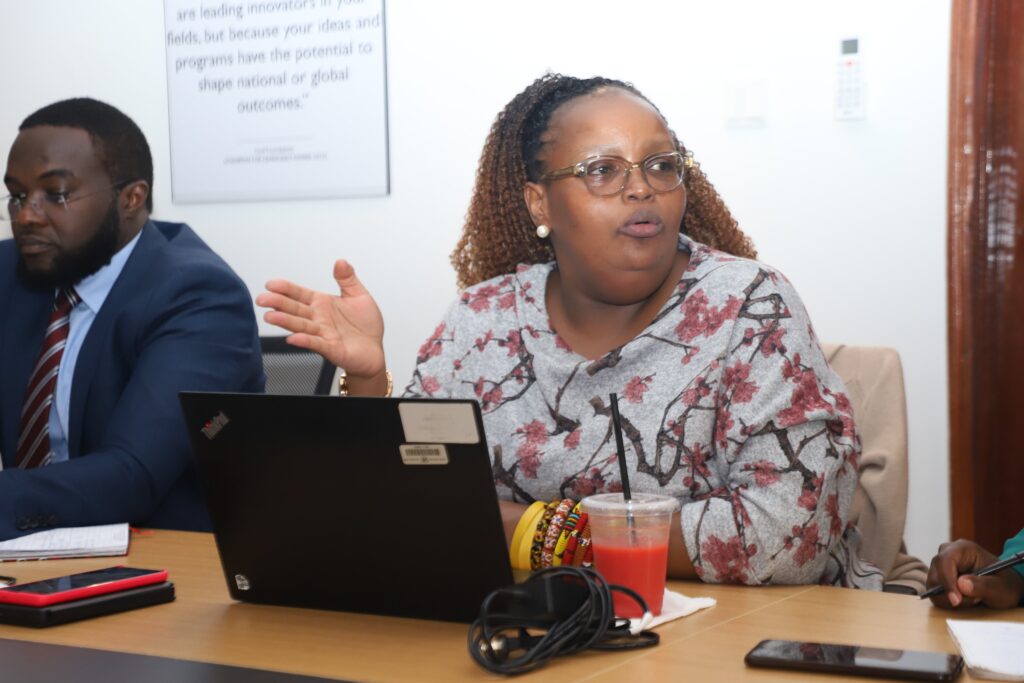
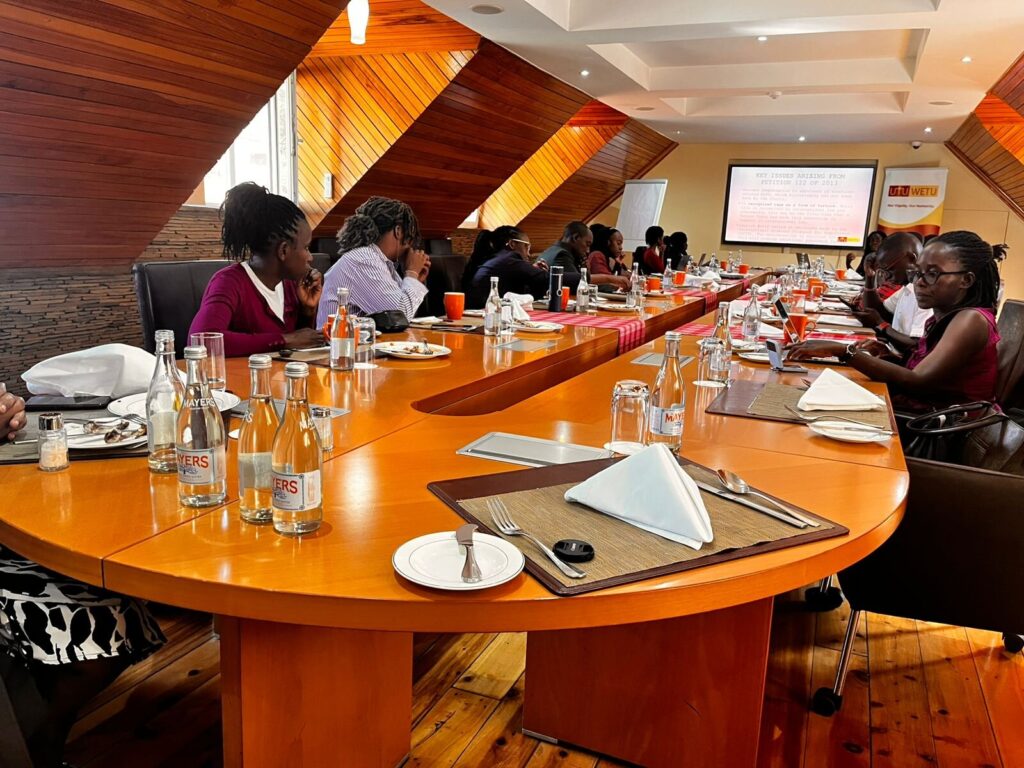
On April 7, 2025, editors from leading media houses gathered at the Kenya Human Rights Commission (KHRC) offices for a breakfast briefing on Petition 122 of 2013. The petition, filed in February 2013, seeks justice and reparations for survivors of sexual violence during the 2007–2008 post-election violence in Kenya. It was filed by six women and two men, supported by four organizations—the Coalition on Violence Against Women, Physicians for Human Rights, ICJ-Kenya, and the Independent Medico-Legal Unit. The Kenya Human Rights Commission later joined the case as an interested party. The petition was the first of its kind globally, aiming to hold the Kenyan government accountable for its failure to prevent, investigate, prosecute, and provide reparations for sexual violence committed during a period of conflict. <blockquote class=”twitter-tweet”><p lang=”en” dir=”ltr”>We’re meeting editors from media houses to brief them on justice and reparations for conflict-related sexual violence and broader human rights violations.<br><br>Our goal is to help them better understand survivors&#39; challenges and encourage more media focus on these issues. <a href=”https://t.co/FUar8FOukv”>pic.twitter.com/FUar8FOukv</a></p>&mdash; UtuWetu (@utu_wetu) <a href=”https://twitter.com/utu_wetu/status/1909147956441211019?ref_src=twsrc%5Etfw”>April 7, 2025</a></blockquote> <script async src=”https://platform.twitter.com/widgets.js” charset=”utf-8″></script> During the 2007–2008 crisis, survivors experienced severe acts of violence, including gang rape, sodomy, forced nudity, and forcible circumcision. In areas such as Kibra, Nakuru, and Naivasha, men were forcibly circumcised using machetes and knives, resulting in permanent injuries. Many of the perpetrators were police officers or members of organized groups, but victims were often unable to identify them. Despite a task force led by Hon. Dorcas Oduor reviewing over 6,800 cases, not a single sexual violence case proceeded to prosecution. Medical records were missing, police reports were unavailable, and victims were discouraged from seeking help. The court noted that the state had actionable intelligence and failed to take preventive measures. There were no emergency hotlines or evacuation plans, and victims were left to suffer in isolation. On December 10, 2020, the High Court ruled that the state had failed to protect some victims, particularly those harmed by state officers. Three women who were attacked by GSU officers received compensation of Ksh 4 million each. Another woman who was raped by civilians and reported the case to the police also received compensation because the state failed to follow up despite being aware. However, the court declined to hold the government responsible for violence committed by civilians, a decision the petitioners have since appealed. The appeal—Civil Appeal E645 of 2021—was heard on February 4, 2025, and judgment is expected on April 11, 2025. During the briefing, editors were informed about the broader context of state accountability in Kenya. Petition 122 was filed alongside other cases, including one on police shootings in Kisumu and another concerning internally displaced persons (IDPs). The outcomes in these cases have been disappointing. The courts ruled that the state did not fail in its duty during police operations, and many IDPs remain uncompensated. The failure to provide justice in these cases reflects a larger pattern of state impunity, visible from the Nyayo era, the 2007–2008 violence, the Baby Pendo case in 2017, and the more recent 2022 and 2024 protests. In all these instances, the state has not been held fully accountable, and victims continue to suffer without recognition or support. Although former President Uhuru Kenyatta publicly apologized to victims in his 2015 State of the Nation Address and established a 10-billion-shilling Restorative Justice Fund, the fund remains inactive. Reparation regulations were developed but have not been implemented, partly due to changes in leadership within the Attorney General’s office. Meanwhile, victims who were awarded compensation by the courts have not received payment, even though the Attorney General and the Ministry of Interior were served with certificates of costs. With every delay, the compensation owed to victims continues to accumulate interest at a rate of 14 percent annually. Wema Toywa, an editor from Ghetto Radio. See the story she published  below Survivors of 2007/2008 Post-Election Violence Anxiously Await Court of Appeal Ruling Slated for Friday

News, NEWSROOM

Survivors Demand Justice on Truth Day

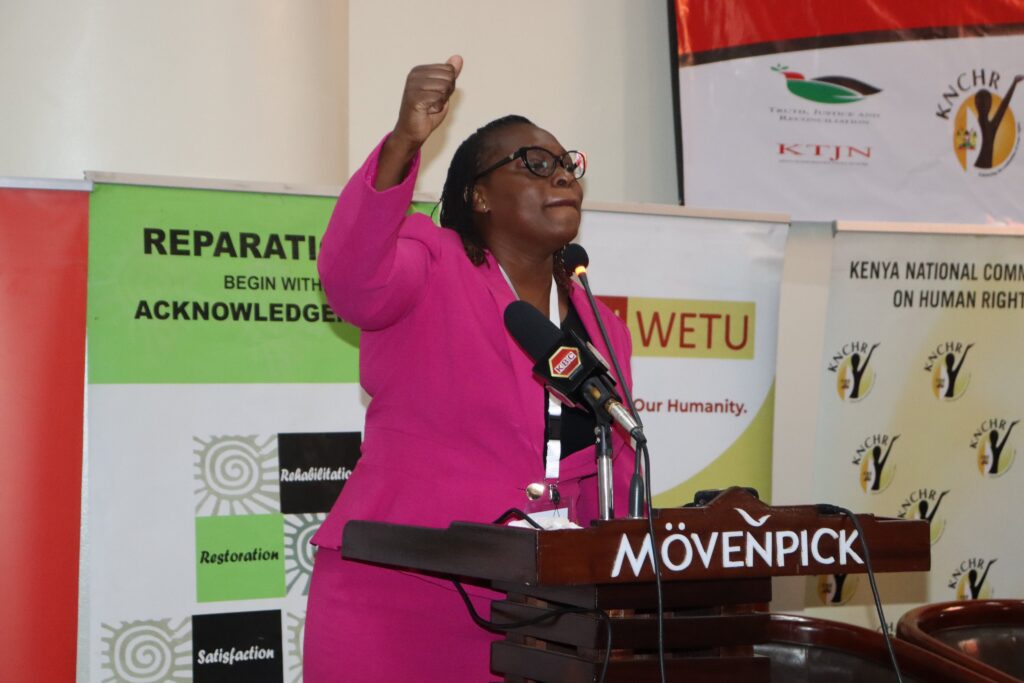
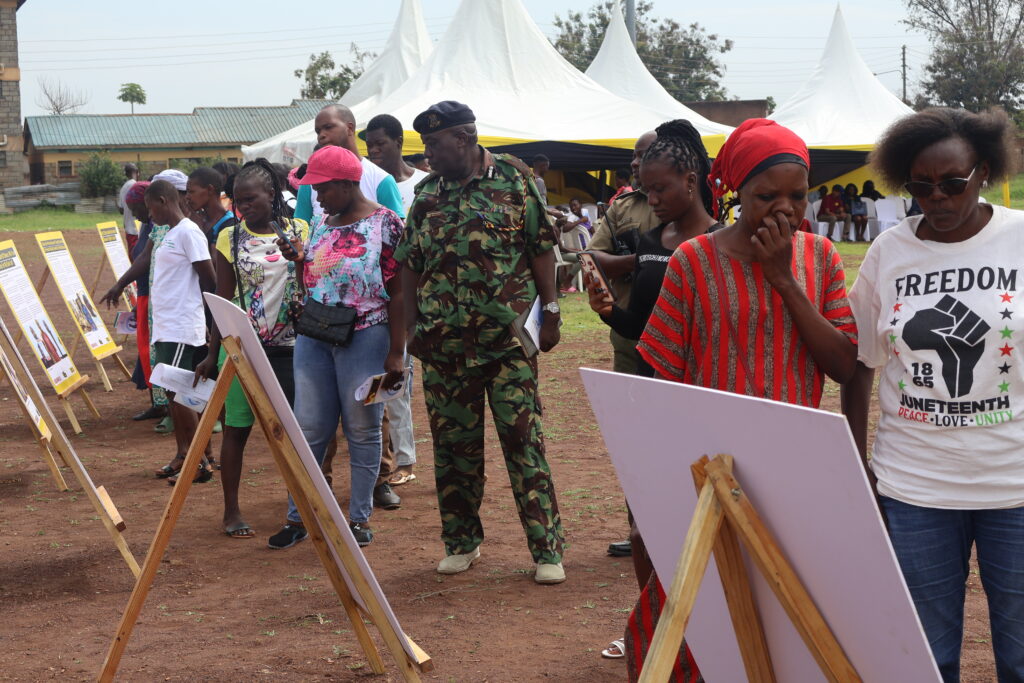
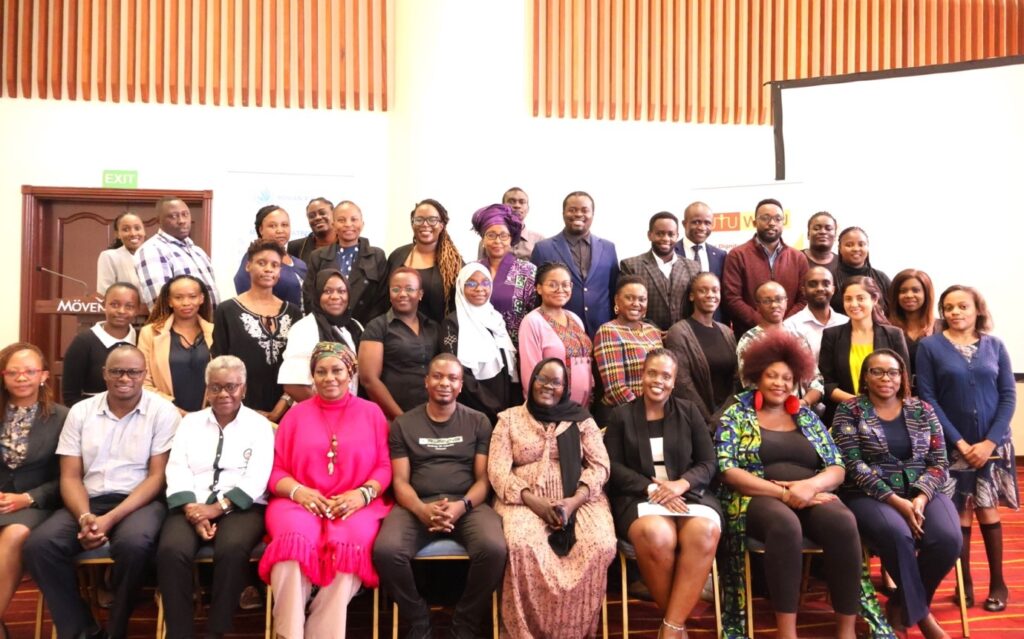
On March 24, 2025, different organizations and individuals came together at the Mövenpick Hotel in Nairobi to mark the International Day for the Right to the Truth concerning Gross Human Rights Violations and for the Dignity of Victims. This day was not just about remembering the past. It was a chance to speak directly to government and political leaders about the pain many Kenyans continue to carry. Survivors of human rights violations, including those harmed during post-election violence, gathered to ask the government why promises made years ago have not been fulfilled. One of the main topics was the KShs. 10 billion Restorative Justice Fund. This fund was announced in 2015 by the former president to help victims of the 2007–2008 post-election violence. Ten years later, the money did not reach those it was meant for. Victims are still waiting. The event also focused on the Truth, Justice and Reconciliation Commission (TJRC) report. The report gave clear recommendations for reparation. But since it was handed over to the government, no action has been taken. Some survivors have gone to court to demand justice. A case called Constitutional Petition 122 of 2013 took eight years before the court ruled. Four survivors were awarded compensation. But even now, the government has not paid them. Another appeal is ongoing, asking the court to recognize all survivors and make the government act. Those who attended included Senator Edwin Sifuna, who read a speech from Raila Odinga. Senator Okiya Omtatah was also present, alongside the victims’ lawyer, Willis Otieno. All of them spoke in support of the victims and the need for action from the government. At the event, survivors said they wanted more than words. They wanted action. They asked government officers to clearly state what steps are being taken to implement the justice fund, adopt reparation rules, and follow court decisions. The event also reminded people that if justice is delayed, more harm can happen. Without real steps, the country risks more violence, especially as the 2027 elections approach. The gathering ended with calls for everyone—government officers, political leaders, and citizens, to work together. Survivors want truth, justice, and compensation. They want their stories heard and their pain recognized. Journalists who attended the Event Aired the following stories in their respective media houses Radio Jambo Classic 105 The Star Newspaper https://www.the-star.co.ke/news/realtime/2025-03-24-explainer-understanding-international-day-for-truth-justice https://www.the-star.co.ke/news/2025-03-25-survivors-of-political-violence-break-silence-demand-justice https://www.the-star.co.ke/news/2025-03-25-raila-commits-to-defending-rights-of-election-violence-survivors#google_vignette Mount Kenya Times  “Reparation Now!”: Calls for Justice Echo on International Truth Day Inooro Tv Ramogi TV KBC K24   Nyanza Review Victims of 2007 Post Election Violence Raise Concerns Whilst Awaiting Justice   Ghetto Radio Honoring Victims & Defenders on International Right to Truth Day   Pear Radio pic.twitter.com/RhrqAYa7vk — UtuWetu (@utu_wetu) April 8, 2025  

News, NEWSROOM

Survivors and Activists Unite in Kibra to Demand Justice and Reparations

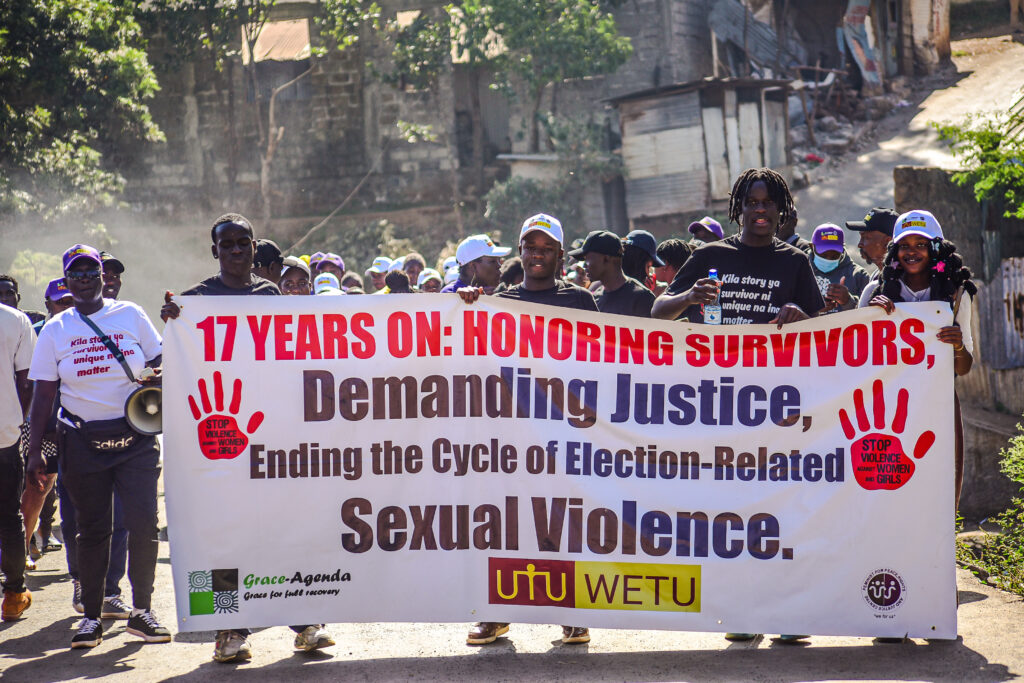
On Friday, February 28, 2025, the streets of Kibra came alive with the voices of resilience, courage, and determination. Survivors, activists, civil society organizations, and community members gathered for an advocacy March for Justice and Reparations, a call for accountability and redress for survivors of election-related sexual violence (ERSV). Organized by UTU WETU in collaboration with Grace Agenda and Feminists for Peace, Rights and Justice Centre, the march reminded people of the long-standing struggles for justice, particularly for women and children who have suffered due to electoral violence. Kibra, a symbol of struggle and resilience, has been a hotspot for electoral violence in Kenya. Seventeen years after the signing of the Kenya National Dialogue and Reconciliation Agreement, which promised justice and reparations for the 2007/08 post-election violence survivors, those commitments remain largely unfulfilled. This march amplified the call for justice for survivors, recognition of children born from sexual violence, and an end to cycles of impunity. The march began at Katwekera Village, with participants receiving t-shirts, caps, whistles, and placards emblazoned with the message: “Kila story ya survivor ni unique na ina matter” (Every survivor’s story is unique and matters). From Katwekera and Olympic to Koyaro Centre, survivors, activists, and duty bearers engaged with the community, demanding justice, reparations, and stronger protections against sexual and gender-based violence (SGBV). Speakers, including UTU WETU’s communications officer Henix Obuchunju, human rights defenders Cecilia May Ayot, Editah Ochieng, and Zuleika Yusuf, addressed participants on the way as they headed to Koyaro centre. key issues such as the impact of election-related sexual violence and impunity, the need for implementation of the Truth, Justice, and Reconciliation Commission (TJRC) and Waki Reports, the ongoing fight for justice in Petition 122 of 2013 and the upcoming court appeal judgement on April 11, 2025, the urgent need for gender-responsive budgeting to address SGBV effectively, and the increasing cases of femicide, with calls for it to be declared a national disaster were discussed. One of the most emotional moments of the day was the town hall meeting at Koyaro Centre, where survivors bravely shared their experiences. Editah Ochieng, a survivor and activist, recounted the horrors of gang rape and unsafe abortion, underscoring the deep trauma and lack of justice for many survivors. Zuleika Yusuf, a Nubian woman, shared how cultural norms forced her to endure 15 years of domestic violence, only finding freedom through the solidarity of fellow survivors. Other survivors, including Angela Nzilani, a visually impaired woman, and Wycliffe Wetende, a person with albinism, detailed the additional layers of discrimination and violence they endured. The testimony of a child born out of rape, who faced abuse and rejection, reminded everyone of the long-lasting impact of election-related sexual violence.         Representatives from government agencies, civil society, and law enforcement engaged in discussions with participants. Lynette Kitui from the State Department for Gender committed to strengthening referral pathways for GBV survivors. Lynette Kitui   Christine Owino from the Independent Policing Oversight Authority (IPOA) acknowledged the community’s mistrust in police accountability and called for better forensic evidence collection to aid prosecutions. However, survivors and activists emphasized that words are not enough, action is urgently needed to ensure justice is served. Our media partners covered stories from the march; check out their reports through the links below. Ramogi Tv The Star Newspaper  https://www.the-star.co.ke/news/2025-03-01-17-years-on-kibra-march-honours-survivors-of-poll-violence. Ghetto Radio  Ruben Fm   Ghetto FM Pamoja FM  https://pamojafm.co.ke/news/kibra-march-amplifies-call-for-justice-for-survivors/ Mtaani Radio Some of the survivors who spoke during the march were later invited to K24 to discuss the impact of rape. Zuleika Yusuf Sarah Dafala   

News, NEWSROOM

Updates on the Hearing in the Petition 122 Appeal

The Court of Appeal, led by Justices Daniel Musinga, Francis Tuiyott, and George Odunga, today heard submissions in a partial appeal of petition 122 of 2013. The appeal, filed by seven survivors of the 2007-2008 post-election sexual violence alongside the Coalition on Violence Against Women, the Independent Medico-Legal Unit, the International Commission of Jurists, and Physicians for Human Rights, seeks state accountability for the failure to prevent, investigate, and prosecute cases of sexual and gender-based violence (SGBV) during the conflict. Represented by lawyer Willis Otieno, the petitioners argue that the state neglected its duty to protect victims and failed to provide justice, support, or reparations. Otieno criticized the earlier High Court ruling by Justice Weldon Korir, which limited compensation to victims abused by state officers while excluding those attacked by civilians. He asserted that the government bears responsibility for all victims, as it failed to act on intelligence reports, provide security, or address systemic failures that enabled the violence. The case, which stems from widespread sexual violence following Kenya’s disputed 2007 election, highlights the longstanding fight for justice by survivors. Human rights groups have documented hundreds of cases of rape, sexual torture, and other abuses perpetrated by both security forces and civilians. Despite various commissions, including the Truth, Justice, and Reconciliation Commission (TJRC), acknowledging the violations, many survivors remain without redress. Through Senior State Counsel Emmanuel Bitta, the government opposed the appeal, arguing that the incidents predated the 2010 Constitution and that victims who did not formally report their cases could not claim compensation. The Independent Policing Oversight Authority (IPOA) also distanced itself, stating it was established in 2012 and could not investigate prior violations. The petitioners, however, insist that justice cannot be denied based on procedural technicalities. They argue that victims’ medical records from Kenyatta National Hospital and reports from human rights organizations provide sufficient evidence. The case also seeks systemic reforms, including a national database for survivors and accountability measures against police officers implicated in SGBV during the violence. The court is expected to deliver its judgment on April 11, 2025, a decision that could set a crucial precedent for state accountability in cases of conflict-related sexual violence. Here are links to articles from journalists who reported on the court case. https://www.standardmedia.co.ke/national/article/2001511044/porn-video-interrupts-kenyan-court-hearing-of-post-election-sexual-violence-victims https://www.the-star.co.ke/news/2025-02-05-hackers-disrupt-virtual-court-hearing-with-adult-content https://www.youtube.com/live/-hz62zF7Otw https://pamojafm.co.ke/news/court-disrupted-as-judges-hear-appeal-on-post-election-sexual-violence/

News, NEWSROOM

Community Voices Demand Justice and Accountability in Nyalenda

Residents of Nyalenda, Kisumu, gathered for a community dialogue aimed at addressing systemic injustices and police accountability. Organized by Amnesty International Kenya and supported by organizations like UTU WETU, the meeting highlighted pressing concerns affecting the community. Photos: Highlights from the Community Dialogue in Nyalenda, Kisumu. pic.twitter.com/U7BXaVWakw — UtuWetu (@utu_wetu) December 20, 2024   Among the key issues raised was the delayed justice in the Baby Pendo case, with residents lamenting the slow court process as a symbol of systemic failure. “Justice delayed feels like justice denied,” one resident remarked. Survivors of sexual and gender-based violence (SGBV) expressed frustration over the unavailability of P3 forms in police stations, which are essential for pursuing legal and medical support. Financial exploitation surrounding these forms only deepens the trauma for survivors.   We joined other partners in Nyalenda, Kisumu, for a community dialogue on addressing SGBV and police brutality, particularly during times of conflict. This community is DEMANDING accountability and proactive measures to safeguard their rights. pic.twitter.com/WyhZO9RWID — UtuWetu (@utu_wetu) December 20, 2024 Local authorities offered explanations for these concerns, but their responses left residents unsatisfied. UTU WETU plans to facilitate more dialogues to bridge the gap between the community and justice systems.

News, NEWSROOM

The Scars of 2007/8 PEV

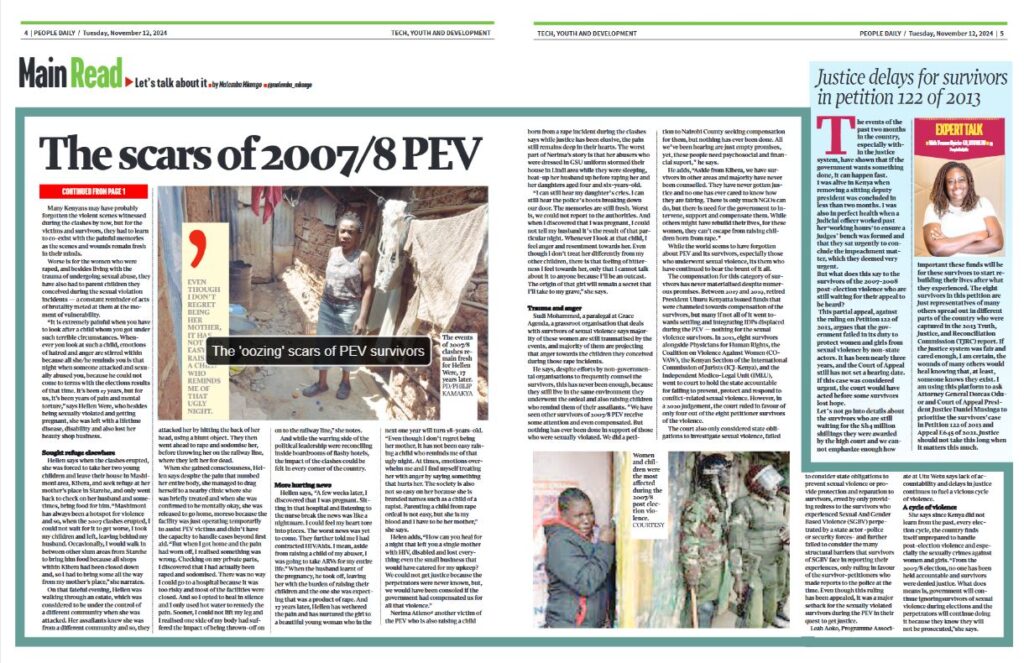
Malemba Mkongo, a journalist with People Daily, highlights the ongoing struggle for justice faced by victims of post-election violence. Among these individuals are survivors of sexual violence who continue to hold onto hope that the recommendations from the Truth, Justice, and Reconciliation Commission (TJRC) report will one day be implemented. For the full story, visit page 20 via this link: Read more here.        

News, NEWSROOM

UTU WETU Hosts Breakfast Meeting with Journalists on Petition 122

This morning, UTU WETU  convened a breakfast meeting with select journalists, creating a space for dialogue and strategy-building around Petition 122 of 2013. The meeting offered an update on the progress and impact of this landmark case, which stands as a beacon of hope for survivors of sexual and gender-based violence (SGBV) and as a call for increased state accountability. Our team and medical experts from Physicians for Human Rights highlighted the latest developments in the petition and discussed the steps ahead as we navigate the appeals process. Beyond the case specifics, the discussion centred on the broader implications of Petition 122 in strengthening legal protections for survivors of SGBV and reinforcing the state’s responsibility to prevent and respond to violence. This morning, we discussed our advocacy work for implementing the judgment in Petition 122 of 2013, ongoing appeal case, and more with journalists from various media houses. pic.twitter.com/V3LZpDvCgj — UtuWetu (@utu_wetu) October 30, 2024 We insisted with the journalists on amplifying these stories and playing a critical role in our advocacy efforts. With their unique ability to reach hearts and minds, journalists are allies in the fight for justice. Their commitment to telling these stories with clarity and sensitivity is vital to building public understanding and sustaining momentum for meaningful change. We extend our deepest gratitude to the journalists who joined us today and look forward to their continued support in raising the voices of survivors and holding institutions accountable.   Here are some news articles by journalists who attended the breakfast meeting. Radio Maisha   The Star Newspaper  https://www.the-star.co.ke/news/2024-10-30-delayed-justice-mystery-of-no-show-cop-in-baby-pendo-case https://www.the-star.co.ke/news/2025-01-09-police-bosses-to-be-held-liable-for-offences-committed-by-juniors

News, NEWSROOM

Update on Engagement Meeting to Prevent and Respond to SGBV

On September 30, 2024, in partnership with the Office of the High Commissioner for Human Rights (OHCHR), Utu Wetu Trust hosted an engagement meeting in Nairobi. This event brought together survivors, civil society actors, and key duty bearers to address the prevention and response to sexual and gender-based violence (SGBV) across Kenya. The initiative aligns with our ongoing commitment to fostering a multi-stakeholder approach in tackling SGBV, from everyday incidents to crisis moments, including the recent “Gen Z Protests.” The convening provided a platform to explore the continuum of SGBV and how it manifests across periods of peace and unrest. Discussions focused on the systemic gender inequalities, harmful societal norms, and power dynamics that perpetuate violence. Participants examined the complex landscape of SGBV as both a structural and personal violation, emphasizing the need for a comprehensive understanding of the issue across different contexts. Through collaborative dialogue, participants worked to draw connections between various instances of SGBV in Kenya, underscoring the importance of a survivor-centred approach that prioritizes the voices and experiences of those affected. The engagement meeting fostered valuable reflections on Kenya’s progress in addressing SGBV while identifying critical gaps requiring urgent attention. Recognizing the need for a coordinated and collaborative response, participants developed action points and recommendations to strengthen partnerships between duty-bearers and civil society. These action points include strategies to improve support structures, enhance legal frameworks, and increase community awareness around SGBV issues. The meeting concluded with the establishment of working groups tasked with driving forward these actionable plans to bolster support systems, promote legal protections, and foster community resilience. This engagement underscores Utu Wetu Trust’s dedication to transformative change in SGBV prevention and response efforts. We remain committed to amplifying survivor voices and working alongside key stakeholders to move Kenya closer to a society free from violence and fear. Our efforts will continue to focus on actionable, survivor-centred solutions, driving sustainable progress in the fight against SGBV nationwide.

Image: Reuters/T. Mukoya
News, NEWSROOM, OUR WORK

Police Brutality in Kenya: A force by Any Other Name is Just as Brutal.

By Leah Aoko The recent protests the finance bill in Kenya, dubbed #rejectfinancebill have been a stark reminder of the continued use of force and lack of accountability in the police service. Amidst the clamor for the law makers to reject the impugned bill, protesters were manhandled, roughened up, harassed, beaten and unfortunately even killed. According to the Kenya National Commission on Human Rights (KNCHR), about 40 people have lost their lives while scores remain injured because of police brutality. More specifically, 25th June 2024 will forever be etched in the minds of many Kenyans who watched on live TV as protesters matching to #occupyparliament were horrendously sprayed with bullets leaving bodies strewn along parliament road. This resulted into national and international outcry on the unrelenting brutality of the officers then stationed at parliament.  Still on the finance bill protests, the police have been implicated on subsequent forced abductions and torture of people they thought were leading the campaign. Unfortunately, it is not known how many people so far have been abducted and releases/not released. Days of protests have become another way to showcase the much-needed police reforms in the country. Police brutality during conflict goes way back to the 80s and the 90s during the Nyayo era where the police force was used as a weapon against opposing citizens who fought for multipartyism. Back then, anyone who fought the state was deemed unpatriotic and would often go ‘missing’ before resurfacing and in worse case scenarios being found dead. Since then, electioneering periods have often been visited by cases of police brutality against the opposition supporters.       In 2007, there was widespread atrocities committed in the country. The said general elections period is infamous for ensuing spontaneous violence and crimes against humanity. According to the International Criminal Court, crimes against humanity such as murder, deportation or forcible transfer of population, persecution, rape, and other inhumane acts took place in the country. In 2017, Kenya’s presidential election also was marred by serious human rights violations, including gang rapes, unlawful killings and beatings by police during protests and house-to-house operations in western Kenya, which was aligned to the opposition. At least 12 people were reportedly killed and over 100 badly injured. The Kenya National Commission on Human Rights also reported that the police had killed at least 24 people nationwide, including one in Kisumu and 17 in Nairobi. The numbers reported are most likely much higher, as the Kenyan media were slow in reporting on the violence and families were afraid to speak out. Amongst the casualties included six-month-old Samantha Pendo who died after police officers reportedly smashed her head while in the arms of her mother, in Nyalenda, an informal settlement in Kisumu. This mirrors the current police brutality casualties where minors including a 12 year old boy from Rongai have been shot dead by police officers tackling ‘criminals’ in the finance bill protests. A force by any other name is just as brutal. It seems years of advocacy on police reforms and the need for the police to respect the rights of protesters have yielded very little considering the recent protests. The brutalizing and killing of protesters in broad day light had resulted to questions of accountability and the needs to ensure the full force of the law comes into play as a deterrence measure for the rogue police. This also brings into the spotlight ongoing cases on police brutality and state accountability such as the baby pendo case for which the police’ suspects are yet to take plea. Subsequent periods of unrest, maandamano, etc. have seen many more ‘baby pendos’ killed. There is still need to unearth other atrocities that may have been committed such as sexual violence, gang rape, robberies etc. by the police and other rogue elements during the protests. It has been a sad scene taking us back to the dark days where people fighting for their rights lost their lives all together in the hands of an entity meant to protect and serve civilians. Still, we will relentlessly fight to bring every ‘criminal officer’ to answer for their actions in the line of duty. Aluta Continua!

Scroll to Top